
Last Updated: October 30, 2026
Quick Summary
Climate change affects primary consumers, the herbivores that eat plants, by altering their feeding patterns and food supply. Rising temperatures change how much they eat, while shifted plant growth creates timing mismatches that reduce survival and can cascade through the food web.
- Warmer temperatures can raise metabolic demand, pushing herbivores to consume more forage.
- Earlier spring warming can leave consumers out of step with peak plant food quality.
- Multi-year drought can push herbivore populations into deeper, harder-to-reverse declines.
- Consumer declines can trigger trophic cascades that affect predators and producers.
- Habitat connectivity and staggered flowering help buffer consumers against climate stress.
Table of Contents
- Who Primary Consumers Are and Why They Matter
- How Rising Temperatures Change Herbivore Feeding Patterns
- Phenological Mismatch Between Consumers and Their Food
- Consumer-Resource Population Dynamics Under Climate Stress
- Trophic Cascade Effects of Climate Change Across Food Webs
- Measuring Population Decline in Primary Consumers
- Adaptation Options for Primary Consumer Habitats and Next Steps for Research
- Frequently Asked Questions
Who Primary Consumers Are and Why They Matter
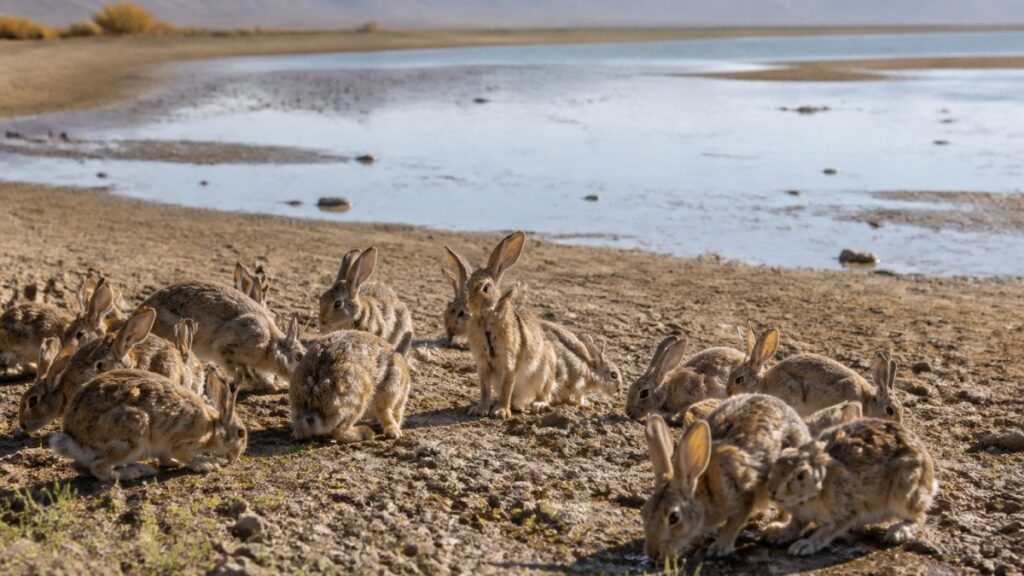
Primary consumers are the herbivores that eat producers, the plants and algae that capture energy from sunlight, and they sit at the second trophic level of most food webs. Insects, grazing mammals, zooplankton and seed-eating birds all fall into this group. Because they convert plant matter into animal tissue, they control how much energy reaches the predators above them, which is why any shift in their numbers ripples through the whole system.
The link between climate and these animals is more direct than many people expect. Food production already accounts for roughly 20-30% of greenhouse gas emissions, according to a Annual Review of Public Health review on climate change, food supply and dietary guidelines, which underlines how tightly human food systems and climate are bound together. The same coupling runs through natural ecosystems, where herbivore populations track plant growth closely.
For a reader trying to understand the topic from scratch, the core idea is simple: primary consumers depend on producers, and producers depend on climate. Accurate Market Research approaches the subject from the consumer-behavior side as well, and the parallel is instructive. A review on consumer behavior and climate change notes that consumers often cannot identify which behavior changes are genuinely worthwhile, and herbivores face a similar problem when they cannot tell which plants will still be there next season.
For a fuller definition and examples across ecosystems, see what primary consumers are, with definitions, examples and ecosystems.
How Rising Temperatures Change Herbivore Feeding Patterns
Rising temperatures alter when and how much herbivores eat. Warmer conditions can increase metabolic demand, pushing animals to consume more forage just to maintain body condition, while heat stress can suppress appetite and movement during the hottest parts of the day. The net effect depends on the species, its habitat and how quickly plant quality declines under the new climate.
Climate also reshapes the plants themselves. Changes in precipitation and extreme weather affect crop and wild vegetation yields, and the USDA identifies food availability, access, use and stability as dimensions that climate change can affect, according to the U.S. Department of Agriculture’s climate change and global food security resource. When forage quantity or nutritional quality drops, herbivores may spend more time feeding to meet the same energy needs, which exposes them to predators and environmental stress.
Watch out: a shift in grazing pressure can look like a population success in one season while quietly degrading the vegetation it depends on, so short-term counts can mislead.
Phenological Mismatch Between Consumers and Their Food
Phenological mismatch occurs when the timing of a consumer’s life cycle drifts out of step with the availability of its food. Many herbivores time births, emergence or migration to peak plant growth. When spring warms earlier, plants may leaf out or flower sooner than the animals that depend on them, leaving a gap in the window of highest food quality.
This is one of the most under-discussed angles in climate coverage. Most public writing on food security focuses on human supply chains, but the ecological version works through timing rather than totals. A consumer can have enough food in a season on average and still miss the narrow window when its young need protein-rich forage.
The effect compounds when different species respond at different rates. Insects may shift emergence faster than the plants they feed on, or birds may keep their migration schedules while their insect prey peaks earlier. Each mismatch reduces survival in a way that a simple count of total biomass will not reveal.
The table below summarises how timing mismatches between herbivores and their food can arise and what helps buffer them, drawn from the discussion above.
| Mismatch driver | Mechanism | Buffering approach |
|---|---|---|
| Earlier spring warming | Plants leaf out or flower sooner than consumers time their life cycles | Staggered flowering and leafing across species |
| Different response rates | Insects shift emergence faster than the plants they feed on | Varied vegetation structure |
| Birds keep migration schedules | Insect prey peaks earlier than birds arrive | Habitat connectivity to track food |
| Narrow feeding window | Young miss the protein-rich forage peak | Monitoring timing, not just total biomass |
Consumer-Resource Population Dynamics Under Climate Stress
Population dynamics in primary consumers follow a predator-prey-like logic with producers as the resource, but climate stress changes the rules in ways a simple lag model misses. The core mechanism is a mismatch between how fast plants respond to warming and how fast herbivores can adjust their numbers. Plant productivity can shift within a single growing season, while herbivore populations typically respond over multiple breeding cycles, so the resource and the consumer are rarely in equilibrium once the climate starts moving.
A concrete example is the snowshoe hare and its browse in the boreal forest. Hare populations cycle over roughly 8 to 11 years, and the cycle depends on the quality and quantity of woody browse. Warmer winters and earlier snowmelt can shorten the window when browse is accessible and increase heat stress on hares, which compresses the peak of the cycle and can make the trough deeper.
Three mechanisms drive these swings, and each responds differently to climate:
- Carrying capacity shifts. Multi-year drought lowers the ceiling on herbivore numbers by reducing forage biomass and quality. A single dry year may only cause a dip, but three or four consecutive dry years can push a population below the threshold where it recovers quickly.
- Predator buffering. When herbivores decline, predators switch prey or decline too, which can release the remaining herbivores from pressure and speed recovery. Climate stress that also reduces predator numbers can therefore produce a false rebound in herbivores that then overgraze recovering vegetation.
- Disease and parasite pressure. Warmer conditions can expand the range of parasites and pathogens that affect herbivores, adding a mortality source that is independent of food supply. This is one reason a population can keep declining even after forage recovers.
A single season’s count can mislead in either direction. A wet year after a drought can produce a spike in herbivore numbers that looks like recovery but reflects a temporary flush of forage, not a restored carrying capacity. Analysts should read these dynamics across at least three to five years before drawing conclusions.
The timing of these swings matters for management. Short droughts may cause a sharp dip that populations recover from within a few breeding cycles, while multi-year drought can push a population into a decline that is hard to reverse. Consumer-resource population dynamics under climate stress are therefore best read across several years rather than from a single season’s snapshot, and the most useful monitoring pairs herbivore counts with direct measures of plant productivity and predator activity at the same sites.
Trophic Cascade Effects of Climate Change Across Food Webs
A trophic cascade occurs when changes at one level of a food web propagate to others. If climate stress reduces primary consumer numbers, predators lose prey and may decline, while producers can then overgrow in the absence of grazing pressure. The cascade can also run the other way, as a predator collapse allows herbivores to multiply and overgraze vegetation.
These effects are rarely linear. Climate can disrupt several links at once, so the net outcome depends on which species respond fastest and which are buffered by alternative food sources. Trophic cascade effects of climate change are therefore hard to predict from any single species, which is why ecologists increasingly model whole webs rather than pairs.
For the consumer side of this picture, the practical lesson is that primary consumers are the hinge. Their response to heat, rainfall and timing shapes both what sits above them and what sits below.
Measuring Population Decline in Primary Consumers
Detecting decline in herbivore populations requires consistent field methods. Researchers typically combine repeated transect counts, mark-recapture surveys, camera traps and, for insects, standardized trapping. Each method has blind spots, so reliable monitoring usually triangulates among them and tracks the same sites across many years.
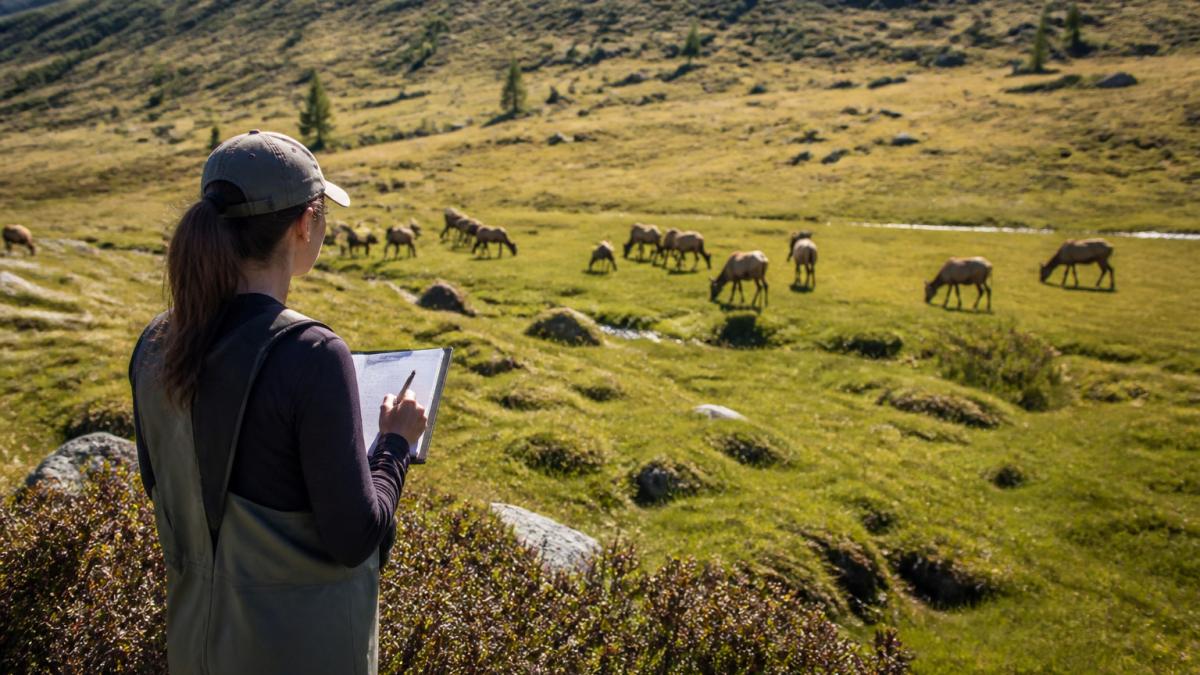
Good measurement starts with a baseline and a clear definition of what counts as decline. A drop in local abundance may reflect habitat shifts rather than a true population loss, so analysts separate range changes from density changes before drawing conclusions. Long-term data sets are the most valuable because they distinguish a cyclical dip from a sustained trend.
Measuring population decline in primary consumers also depends on sample size and survey frequency. Sparse sampling can hide a steep decline or create the appearance of one, so study design should be set before fieldwork begins. The same rigor applies to any research program, whether it tracks animals or customers, and structured data collection supports sound conclusions.
Adaptation Options for Primary Consumer Habitats and Next Steps for Research
Adaptation for primary consumers is the angle most coverage of climate and food systems skips.
1. Protect and build habitat connectivity. As ranges shift, primary consumers need routes to move. Corridors that link patches of habitat let animals track their food as plant communities migrate upslope or poleward.
2. Maintain varied vegetation structure and staggered flowering. A mix of plant species that leaf out, flower, and fruit at different times buffers against phenological mismatch.
3. Reduce non-climate stressors. Land conversion, pollution, and invasive species compound climate stress. Reducing them does not stop warming, but it lowers the total burden on herbivore populations and buys time for adaptation.
4. Use assisted migration selectively. For species that cannot move fast enough, moving individuals or seeds to cooler or higher-elevation sites is an option. The trade-off is risk: assisted migration can introduce species outside their historical range and disrupt existing communities.
The most effective adaptation plans combine at least two of these strategies. Connectivity without vegetation diversity leaves herbivores with routes to food that may not be there when they arrive; vegetation diversity without connectivity traps populations in patches that become too warm.
Research priorities follow from these gaps. Scientists need longer monitoring records that pair herbivore counts with plant productivity and phenology at the same sites, better models of timing mismatch across trophic levels, and experiments that test how habitat changes interact with warming.
Consumer behavior research offers a useful reminder that people also struggle to judge which interventions matter most. Clear evidence and well-designed measurement are the surest way to decide where limited conservation effort will do the most good.
Frequently Asked Questions
What is the primary consumer in ecology?
A primary consumer is an organism that feeds directly on producers, usually plants or algae, and sits at the second trophic level of a food chain. Herbivores such as deer, grasshoppers, zooplankton and many insects are typical examples. Because they convert plant energy into animal biomass, they link producers to carnivores and omnivores. Changes in their numbers or feeding behavior therefore affect nearly every other level of the food web, which is why researchers track them closely when assessing climate impacts.
What happens to an ecosystem if primary consumers disappear?
If primary consumers decline sharply, plant biomass can build up unchecked in some systems, while predators lose a key food source and may decline in turn. The result is often reduced ecosystem stability and altered nutrient cycling. The effect depends on the ecosystem, but the broad pattern of cascading change across trophic levels is one of the most consistent findings in food web ecology, and it is central to understanding trophic cascade effects of climate change.
How do ecologists measure the impact of climate change on consumer-resource models?
Ecologists typically combine long-term population counts, tracking of feeding and foraging behavior, and measurements of plant productivity and phenology. Statistical models then test how changes in temperature or precipitation alter consumer-resource population dynamics. Repeated surveys across seasons and sites help separate climate signals from natural variation, and comparing timing of consumer activity with resource availability can reveal phenological mismatch.
Why are primary consumers considered the bridge between producers and predators?
Primary consumers transfer energy captured by plants to animals higher in the food web. Without them, the energy stored in producers would not reach carnivores in any substantial amount. Their population size and health therefore determine how much food is available to predators, making them a critical link when climate change disrupts either plant growth or consumer survival.
